
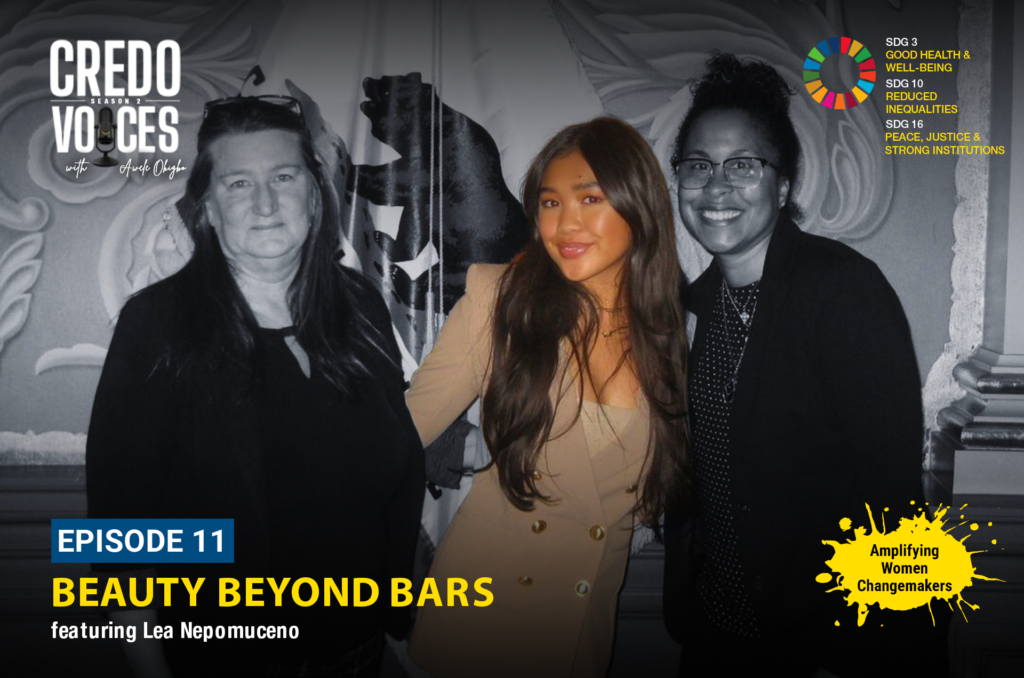
Beauty beyond Bars
Prisons are designed to reduce complexity. Uniforms replace personal clothing. Schedules dictate movement. Identity is narrowed into procedure. For people in these systems, incarceration strips away freedom while quietly eroding dignity and self-recognition.
As America continues to funnel millions through detention facilities each year, these losses remain largely invisible. Discussions of justice tend to focus on punishment, deterrence, or reform at scale. Far less attention is given to the daily realities inside facilities, where access to basic hygiene and personal care is limited and expressions of selfhood are tightly controlled. Products and routines that support health and dignity are often dismissed as trivial, even though they are among the practices that help maintain a sense of humanity.
On this episode of Credo Voices, 19-year-old Lea Nepomuceno, Founder and Executive Director of Beauty Beyond Bars, shares how her high school conversations with people who had been incarcerated inspired her to take action. Those early experiences revealed how the absence of basic hygiene reshaped daily life and identity, highlighting the gap between institutional rules and human needs.
She founded Beauty Beyond Bars to address these gaps, starting by supplying essential hygiene and personal care products that were otherwise unavailable in detention facilities. Over time, the organisation expanded into legislative advocacy to ensure facilities provide appropriate care and developed initiatives that amplify the voices of people in detention through conversation. Together, these efforts form Beauty Beyond Bars’ three-fold approach: providing products, advocating for policy change, and fostering platforms that amplify voices, transforming small acts of care into systemic impact.
The impact is tangible. Access to hygiene products improves health outcomes and reduces infection risk. Legislative efforts ensure that detention facilities respond to essential needs. Public conversation fosters understanding among lawmakers and the broader community, highlighting experiences that are often invisible. Each part reinforces the others, creating a network of care that strengthens dignity and challenges assumptions about who deserves recognition in detention.
Beauty Beyond Bars also connects to broader goals. Its efforts support SDG 3 on health and wellbeing by addressing preventable physical harms. Attention to specific needs advances SDG 5 on gender equality. Working to reduce inequities in access to care and voice aligns with SDG 10. Advocacy for humane treatment and visibility contributes to SDG 16 on justice and strong institutions. The organisation demonstrates that systemic change can begin with attention to everyday human needs.
“Lea’s work with Beauty Beyond Bars invites us to reconsider what dignity looks like inside systems that limit choice,” says Awele Okigbo, Partner at Credo Advisory. “She demonstrates that systemic change often begins not with legislation alone, but with attention to the everyday practices that allow people to feel seen and valued.”
Listen to the full episode on Spotify and visit our website for more information. To learn more about Lea and her work, follow her on LinkedIn and visit the Beauty Beyond Bars website.
New episodes of Credo Voices are released monthly on Spotify, Apple Podcasts, and YouTube as part of Credo Advisory’s commitment to advancing the Sustainable Development Goals and fostering a global community of change-makers.